I still remember the first time a friend replied to my message with just “TW.” I paused and stared at my screen wait what does TW Mean in Text? 😅
I had seen tons of texting abbreviations before, but this one completely threw me off. I didn’t want to reply awkwardly or assume the wrong thing, so instead of guessing, I asked them directly what it meant.
That’s when everything clicked! I learned that TW is used to show concern or care, especially when talking about something serious or sensitive. Now I notice it everywhere in chats, and I know exactly how to respond without overthinking.
Quick Answer:
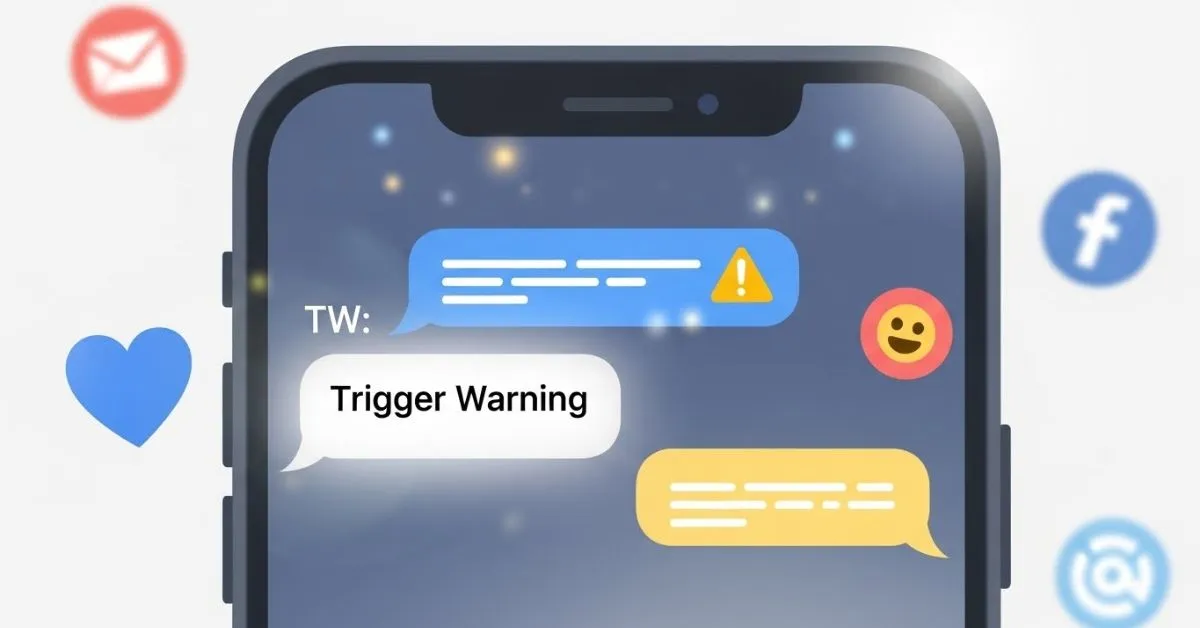
TW means “Trigger Warning.” It’s a considerate way to warn someone that a message may contain sensitive or upsetting content.
🧠 What Does TW Mean in Text?
In texting and online slang, TW stands for “Trigger Warning.”
People use it before a message to alert others that the content might be emotionally sensitive or uncomfortable.
It’s commonly used before topics like:
- Mental health 🧠
- Trauma or abuse
- Violence ⚠️
- Eating disorders
- Death or illness
Example:
A: “TW: anxiety — today was really hard for me”
B: “thanks for the warning, i’m here for you ❤️”
In short:
TW = Trigger Warning = a heads-up about sensitive content
📱 Where Is TW Commonly Used?
You’ll most often see TW in spaces where people share personal or emotional content:
📱 Text messages — serious or emotional talks
💬 Instagram / Twitter / TikTok posts — sensitive topics
🧑🤝🧑 Group chats — giving people a heads-up
💻 Online communities & forums — mental health discussions
📖 Story captions — before heavy topics
Tone: Respectful, thoughtful, caring
❌ Not slangy or playful — it’s used with intention
💬 Examples of TW in Conversation
Here are realistic examples of how TW appears in texts:
- A: “TW: depression — i’ve been struggling lately”
B: “thanks for telling me, i’m listening 💙” - A: “TW: food talk”
B: “okay, i’m good to read” - A: “TW: hospital mention”
B: “thanks for the heads-up”
- A: “TW: violence — that movie scene was intense”
B: “yeah, that part was rough 😬” - A: “TW: loss — today marks one year”
B: “sending you love ❤️” - A: “TW: anxiety rant”
B: “go ahead, i’m here”
🕓 When to Use and When Not to Use TW
✅ When to Use
- Sharing emotional or sensitive experiences
- Talking about trauma or mental health
- Posting heavy content on social media
- Group chats with mixed audiences
- Being considerate of others’ feelings
❌ When Not to Use
- Casual jokes or light chats
- Normal daily updates
- Professional emails (unless context requires it)
- When content is clearly harmless
Comparison Table
| Context | Example Phrase | Why It Works |
| Personal Text | “TW: anxiety” | Thoughtful & caring |
| Social Media | “TW: sensitive topic” | Gives choice to readers |
| Friend Chat | “TW: heavy talk ahead” | Respectful |
| Work Email | “Please be advised…” | More professional |
🔄 Similar Slang Words or Alternatives
| Slang / Phrase | Meaning | When to Use |
| CW | Content Warning | Similar to TW |
| heads-up | Advance notice | Casual |
| FYI | For Your Information | Informational |
| warning | Alert | General |
| note | Important info | Neutral |
| PSA | Public Service Announcement | Broad audience |
FAQs❓
Q1: Is TW the same as CW?
Yes. Both mean a warning about sensitive content. CW is more neutral.
Q2: Is TW only used online?
Mostly, but it can also be used in texts and group chats.
Q3: Is TW formal or casual?
It’s informal but respectful not slangy or playful.
Q4: Can TW be ignored?
It gives people a choice. Some may skip the content.
Q5: Is using TW a good thing?
Yes. It shows empathy and awareness of others’ feelings.
Conclusion
TW is a meaningful and respectful abbreviation that stands for “Trigger Warning.” It’s used to gently warn others about sensitive or potentially upsetting content before sharing it.
Unlike most texting slang, TW isn’t about being funny or casual it’s about being considerate. You’ll often see it in emotional conversations, mental health discussions, or social media posts.
Now that you know what TW means in text, you’ll understand why people use it and how it helps create safer, more thoughtful conversations 💙

I’m Janet Frame, the author of themeaning.com, and I’m an expert in meanings. I uncover the true sense of words, phrases, and slang so you can understand them easily.