I still remember the first time I saw “yw” in a text I paused, reread the message, and thought, “Wait… what does that even mean?”
If you’ve ever been in the same situation, you’re definitely not alone.
We see short forms like this everywhere now in chats, comments, and DMs and it’s easy to feel confused if you don’t know what they stand for.
That’s why I created this quick guide for you.
I’ll explain exactly what “yw” means in text, when you should use it, and when you probably shouldn’t, so you can text with confidence and never feel lost again.
Quick Answer:
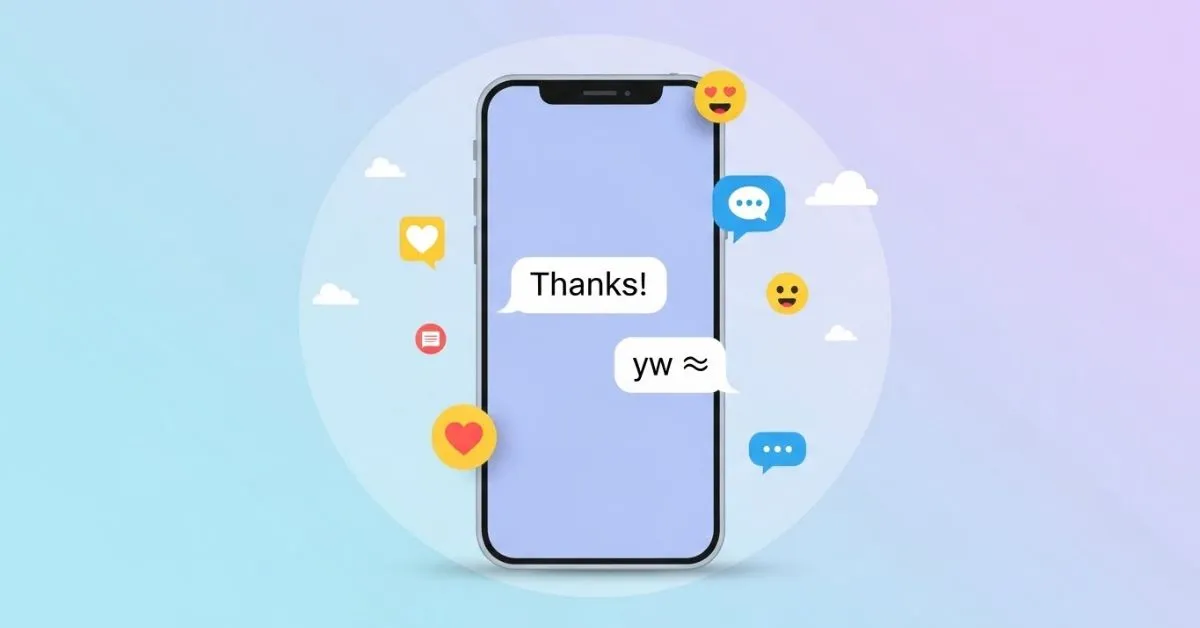
“YW” means “You’re Welcome.” It’s a casual, friendly way of replying after someone thanks you. Think of it as a shorthand for “No problem!” — perfect for texting, social media, and instant chats when you want to respond quickly without typing a full sentence.
What Does YW Mean in Text?
YW = You’re Welcome.
It’s the short form used in texting or online chats when someone thanks you. Instead of writing “You’re welcome,” people just type “yw” to save time.
Example:
A: Thanks for helping me with the assignment!
B: yw 😄
In short: YW = You’re Welcome = A quick, friendly way to acknowledge thanks.
Where Is YW Commonly Used? 📱
YW is mostly used in casual digital communication. Here’s where you’ll see it:
- Texting / SMS 📱 — quick replies to friends or family
- Snapchat / Instagram DMs 🥳 — casual social media chats
- TikTok comments / replies 🎵 — short, friendly responses
- Discord / Gaming chats 🎮 — fast replies after help or trades
Tone: Informal, friendly, social-media–friendly. Not suitable for formal emails or professional messages.
Examples of YW in Conversation 💬
Here are realistic chat examples:
A: Thanks for sending that meme 😂
B: yw 😎
A: Appreciate your help earlier!
B: yw no problem
A: Thanks for picking up lunch!
B: yw 🍕
A: Thank you so much for the advice
B: yw anytime
A: Thanks for covering my shift
B: yw happy to help
A: Thanks for the game tips!
B: yw gg
A: Thanks for being patient with me
B: yw no worries 😄
When to Use and When Not to Use YW 🕓
✅ When to Use
- Friendly chats with friends and family
- Social media replies or comments
- Casual group chats
- Texting someone who thanked you
❌ When Not to Use
- Formal work emails
- Job applications or professional messages
- Legal or official communication
- Situations where full sentences are required
Comparison Table:
| Context | Example Phrase | Why It Works |
| Friend Chat | “No rush, yw 😄” | Casual & friendly |
| Work Chat | “Take your time.” | Polite & professional |
| “Please take your time to review this.” | Formal & clear |
Similar Slang Words or Alternatives 🔄
| Slang | Meaning | When to Use |
| np | No problem | Casual text or social media |
| no prob | No problem | Friend chat, informal |
| ur welcome | You’re welcome | Slightly more formal than “yw” |
| thx | Thanks | Reply to gratitude quickly |
| all good | Everything’s fine | Casual friendly context |
FAQs❓
1. Is YW only used in texting?
Mostly, yes. It’s casual and fits fast digital communication.
2. Can I use YW in professional messages?
No. Use “You’re welcome” instead for formal communication.
3. Does YW mean anything else?
Not in texting slang. In texting, it exclusively means “You’re Welcome.”
4. Can YW be used sarcastically?
Yes, context and tone (like emojis) can change the meaning slightly.
5. How is YW different from np or no prob?
YW is a direct response to thanks; np/no prob is more like reassurance.
6. Can I say YW verbally?
It’s rare but sometimes used verbally among younger speakers familiar with texting slang.
7. Is YW formal or informal?
Informal, casual, and social-media–friendly only.
Conclusion
YW is a simple, time-saving slang that means “You’re Welcome”. It’s perfect for texting, social media, or any casual chat where you want to respond quickly and politely. If you ever feel unsure, remember: YW = You’re Welcome = Friendly acknowledgment of thanks.
Avoid using it in professional or formal settings, but feel free to add emojis or extra words when chatting with friends. Next time someone thanks you in a text, just type YW 😄 and you’re done!

I’m Jane Austen, the author of themeaning.com, and I’m an expert in meanings. I share clear explanations of words, phrases, and slang to help you understand them easily.