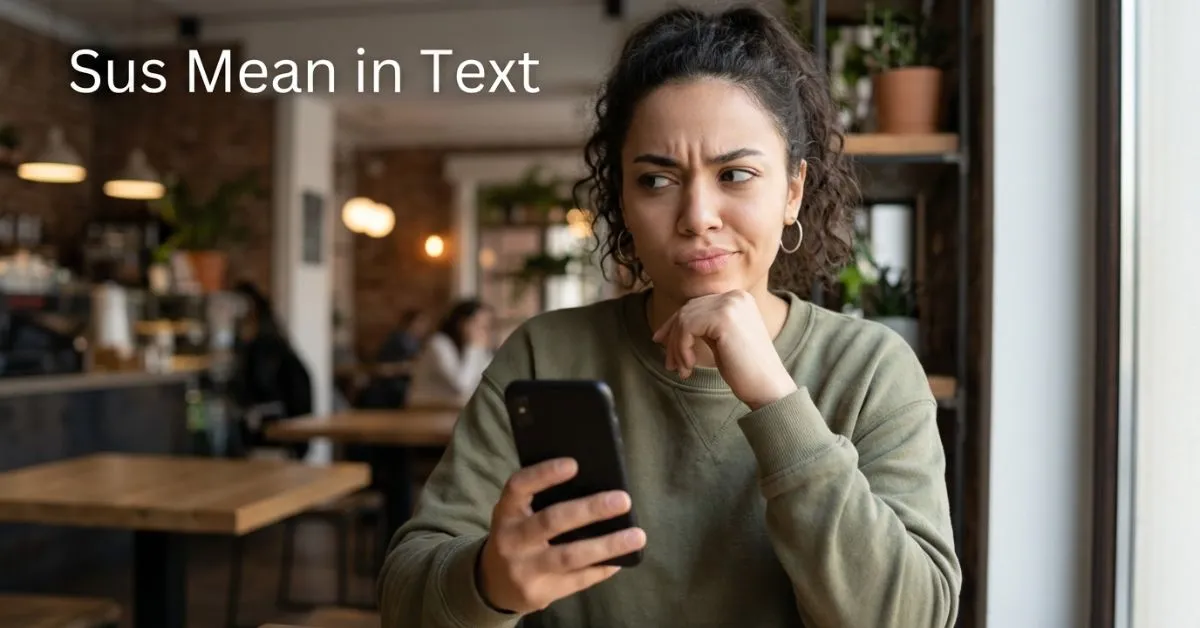
I still remember the first time someone texted me “that’s kinda sus”… and I just paused like, wait… sus? 😅 At first, I thought it was a typo. Maybe they meant “serious” or something else. But the way they used it didn’t make sense with anything I knew. I didn’t want to ask and look clueless, so I just replied normally and moved on.
But then it happened again… and again. Different chats, different people all using “sus” like it was the most normal word ever. That’s when I realized okay, I’m definitely missing something here. So I finally gave in and asked a friend, “yo what does sus even mean?”
And the moment they explained it, everything clicked instantly. After that, I started noticing it everywhere texts, memes, even videos and honestly, I even caught myself using it without thinking 😭 If you’ve ever seen “sus” in a message and felt confused like I did, don’t worry… I’ve got you. Let’s break it down 👇
Quick Answer:
👉 “Sus” means suspicious or suspect someone or something that seems shady, untrustworthy, off, or questionable. It is used in texting to flag behavior, people, or situations that don’t feel quite right.
🧠 What Does “Sus” Mean in Text?
Let’s break down the sus meaning in text properly because while it seems simple on the surface, it actually carries a surprising amount of nuance.
“Sus” is short for “suspicious” or “suspect.”
At its most basic, it means something or someone seems off, shady, untrustworthy, or questionable. When you call something sus, you’re saying your gut is telling you something isn’t right or you’re playfully suggesting someone is being sketchy.
The Two Core Flavors of Sus:
1. The Genuine Suspicion “Sus” This is the version where you’re actually questioning someone’s behavior, motives, or a situation that doesn’t add up. It’s not joking it’s a real flag.
“He said he was home all night but his location was off. That’s sus.”
2. The Playful/Joking “Sus” This is the fun version usually used among friends to tease, joke, or call out something in a lighthearted way. Nobody’s actually accusing anyone of anything serious.
“You’re being really nice to me today… sus 👀”
Where Does “Sus” Come From?
The massive mainstream explosion of sus in text is almost entirely thanks to Among Us the wildly popular multiplayer game that took over the internet around 2020. In Among Us, players try to identify the “Impostor” among the crew and the word “suspicious” (shortened to “sus”) became THE word for calling someone out as potentially being the bad guy.
The game was so culturally dominant that “sus” leaked out of gaming entirely and became everyday vocabulary almost overnight. But the word had been used in slang circles particularly in hip-hop culture well before Among Us made it universal. The game just turbo-charged its adoption.
Full Form: Suspicious / Suspect Origin: Hip-hop slang + gaming culture (Among Us) Tone: Ranges from playful and joking to genuinely accusatory
Example sentence:
“Why are you being so quiet in the group chat today? Very sus behavior 👀”
💡 Summary:
Sus = Suspicious/Suspect = Something or someone that seems shady, off, untrustworthy, or questionable used playfully between friends or seriously to flag sketchy behavior.
📱 Where Is “Sus” Used?
The sus meaning in text has traveled so far from its origins that it now shows up basically everywhere online. Here’s the full map:
- Gaming Chats 🎮 This is the ancestral homeland of “sus.” In Among Us, in Discord gaming servers, in Twitch chat, in multiplayer game lobbies “sus” has been a fixture for years. It’s completely embedded in gaming vocabulary and shows no signs of leaving. Even in non-Among Us games, you’ll hear “that play looked sus” or “this lobby is giving sus vibes.”
- TikTok 🎵 “Sus” content is massive on TikTok. Videos about suspicious behavior, shady situations, red flags in relationships, and called-out moments all live under the “sus” umbrella. Comment sections are filled with “that’s sus” reactions to sketchy situations shown on screen.
- Twitter / X 🐦 Used constantly to react to celebrity behavior, political moments, brand decisions, and general internet drama. If something doesn’t add up publicly, Twitter will collectively declare it sus within minutes.
- Snapchat 👻 Common in private conversations between close friends, especially when sharing receipts or calling out someone’s behavior. “This is so sus” with a screenshot attached is a classic Snapchat move.
- Instagram DMs 📩 Used to react to other people’s posts, stories, or behavior. “His story views are sus” or “the caption she posted is giving sus” are real DM conversations happening right now.
- WhatsApp 💬 Group chats use it heavily, especially when someone in the friend group is acting differently or when the group is collectively analyzing someone’s behavior.
- YouTube Comments Reacting to drama videos, documentary content, true crime, or anything where someone’s behavior is being examined. “Everything about this dude is sus” is basically a staple comment format.
- iMessage / Regular Texting 💬 Casual everyday use between friends. At this point “sus” functions as a completely normal English adjective in texting culture.
Formality Check:
| Type | Fits “Sus”? |
| Casual (friends, gaming, social media) | ✅ Completely natural |
| Semi-formal (online communities, acquaintances) | ✅ Widely understood, generally fine |
| Formal (work, academic, professional) | ❌ Stick to “suspicious” in formal contexts |
💬 Real Conversation Examples
Here’s the sus meaning in text playing out across different real scenarios. Notice how the tone shifts from playful to serious depending on context:
Example 1 The Classic Friend Group Call-Out
Tara: why does Jake keep asking where you’re going every weekend 👀 Liv: RIGHT it’s so sus Tara: very sus behavior from someone who “doesn’t like you”
Example 2 The Among Us / Gaming Origin
PlayerOne: yo who voted me out?? PlayerTwo: bro you were running away from the body sus PlayerOne: I WAS DOING TASKS 😭 PlayerTwo: very sus tasks apparently
Example 3 The Relationship Red Flag
Marcus: she never posts him on her story but she’s “in a relationship” Dev: that’s SO sus dude Marcus: right?? something’s not adding up Dev: major sus energy all around
Example 4 The Playful Tease
Zoe: I made you your favorite cookies 🍪 Kai: …why are you being so nice Zoe: can’t a person just be kind?? Kai: this is sus. what do you want 😂
Example 5 The Group Chat Investigation
Group Chat: Bree: did anyone else notice Tyler left the party early and didn’t tell anyone Sam: sus Nadia: very sus Bree: we’re calling him right now
Example 6 The Social Media Behavior Flag
Ana: he watched my story within 2 seconds of me posting it Mia: SUS Ana: like he’s online but hasn’t texted back in 3 hours Mia: okay that’s actually so sus I’d be annoyed too
Example 7 The Serious Version
Jamie: something feels off about this job offer. the salary is too high and the requirements are too low Chris: yeah that’s genuinely sus, research the company before you respond Jamie: already on it. something doesn’t add up.
Example 8 The Self-Sus Admission
Ryan: okay I know this sounds sus but hear me out Jordan: …go on Ryan: I’ve been watching the same comfort movie every night for two weeks Jordan: okay yeah that’s a little sus but also very relatable 😭
🕓 When to Use and When NOT to Use “Sus”
Knowing the sus meaning in text is one thing knowing when to actually drop it is what makes you fluent rather than just informed.
✅ When to Use “Sus”:
- Calling out sketchy behavior among friends in a casual, relatable way
- Gaming contexts where it’s completely at home and expected
- Reacting to social media drama or situations that don’t add up
- Playfully teasing friends when they’re being unusually nice, secretive, or weird
- Flagging red flags in relationships or situations in a light but pointed way
- Comment sections where you’re reacting to questionable behavior on screen
- When something genuinely doesn’t feel right and you want to name that feeling quickly
❌ When NOT to Use “Sus”:
- Professional emails or work communication “This contract clause seems sus” is not it; use “suspicious” or “questionable”
- Formal academic writing your essay should use real words
- Making serious accusations “sus” is too light for genuinely serious situations where real accusation language is needed
- With older generations who won’t understand it and may take it literally or incorrectly
- In legal, medical, or other high stakes contexts the casual tone of “sus” undermines the seriousness of those situations
- When you actually mean “suspect” as a noun “sus” as slang is an adjective describing behavior, not a label for a person in a formal sense
📊 Context Comparison Table:
| Context | Example | Why It Works (or Doesn’t) |
| Friend group chat | “why is he acting so sus today 👀” | Casual, familiar, perfectly placed |
| Gaming Discord | “you’re so sus right now bro” | Native language of the space |
| TikTok comment | “the way he looked away was sus” | Fits platform culture completely |
| Work email | ❌ “this vendor’s pricing seems sus” | Unprofessional use “suspicious” or “questionable” |
| Text to parents | ⚠️ “this deal sounds sus mom” | Depends on your parents proceed with caution |
| Academic paper | ❌ “the methodology appears sus” | Absolutely not use formal language |
🔄 Similar Slang Words or Alternatives
If “sus” in text is in your vocabulary, these related slang terms live in the same neighborhood:
| Slang | Meaning | When to Use |
| Shady | Acting dishonestly or suspiciously | When someone’s behavior seems deliberately deceptive |
| Sketchy | Feeling unreliable, unsafe, or questionable | For situations or places that feel off, not just people |
| Cap | A lie / “No cap” means no lie | When you want to call out dishonesty directly |
| Red Flag | A warning sign in behavior or a relationship | When something sus is specifically a relationship concern |
| Lowkey | Subtly, quietly often used to soften a statement | “This is lowkey sus” = I’m suspicious but keeping it calm |
| Off | Something feels wrong or different than usual | Softer alternative to sus “something feels off” |
| Fishy | Suspicious, something doesn’t smell right | Older slang with the same core meaning as sus |
| Caught in 4K | Caught doing something clearly and undeniably | When the sus behavior has actual proof attached |
The closest synonym is definitely “sketchy” they’re almost interchangeable in most situations. But “sus” has the gaming cultural weight and the Among Us cultural moment behind it, which makes it feel more distinctly Gen Z. “Fishy” and “shady” skew slightly older. “Red flag” is more specific to relationship/behavioral warning signs.
FAQs ❓
1. What does “sus” mean in texting?
Sus means suspicious or suspect. It’s used to describe someone or something that seems shady, off, untrustworthy, or questionable. It can be used playfully between friends or seriously when something genuinely doesn’t add up.
2. Where did “sus” come from?
“Sus” as slang existed in hip-hop culture before this, but its massive mainstream adoption came from the game Among Us, which became a global phenomenon around 2020. In the game, players use “sus” to accuse others of being the Impostor. The word exploded into everyday language from there.
3. Is “sus” rude or insulting?
It depends on context and delivery. Between close friends in a joking context, it’s completely playful and non-offensive. Directed seriously at someone especially in a public or group setting it can feel like a genuine accusation and carry real weight. Read the room before you drop a serious “sus.”
4. Can I use “sus” in professional settings?
Generally no. While “sus” is now widely understood, it still reads as casual and informal. In professional communication emails, meetings, work messages use the full word “suspicious” or more formal alternatives like “questionable” or “concerning.”
5. Who uses “sus” the most?
Gen Z and millennials especially those active in gaming culture, TikTok, and general internet culture. But honestly, “sus” has crossed over so completely that it’s become part of broader American casual vocabulary. Even people who don’t identify as “online” have started using it.
6. Is “sus” always about people, or can it describe situations too?
Both! Sus in text is completely flexible. “He’s acting sus” (person), “this situation is sus” (situation), “that deal sounds sus” (offer), “the vibe in here is sus” (atmosphere) all completely natural uses of the word.
7. Is “sus” the same as calling someone a liar?
Not exactly. Sus means you’re suspicious you think something might be off or dishonest, but you’re not making a definitive accusation. It’s more “I’m raising an eyebrow” than “I know you’re lying.” Calling someone a liar is much more direct and serious than calling them sus.
8. Has “sus” made it into mainstream language permanently?
Pretty much, yes. At this point sus functions as a legitimate informal adjective in American English. It appears in media, in casual adult conversation, in journalism covering internet culture, and even in some dictionaries as informal usage. Among Us launched it to the mainstream, but it’s clearly here to stay well beyond the game’s peak popularity.
Conclusion
If you came into this article confused about what “sus” means in text, you are leaving with the full picture the meaning, the history, the vibe, and the complete social rulebook for using it correctly.
Final recap:
🔥 Sus = Suspicious / Suspect = Something or someone that seems shady, off, questionable, or untrustworthy used playfully between friends or seriously to flag real concerns, with roots in both hip-hop culture and gaming culture thanks to Among Us.
This one of the most versatile pieces of slang in the modern texting vocabulary. It’s funny when you need funny. It’s pointed when you need pointed. It covers everything from playful group chat teasing to genuine “wait, something isn’t right here” moments.
Use it with your people. Use it in casual spaces. Apply it in comment sections when something on screen raises your eyebrow. Use it in gaming chats where it was literally born.
Just keep it out of your work emails, your academic papers, and any situation where the stakes are too high for a three-letter casual callout to carry the weight.
Because when something or someone is genuinely off?
“Sus” will always say it best. 👀✨
Discover More Articles:
- RB Mean in Text : Simple Explanation + Examples💬(2026)
- TTH Mean in Text : Full Guide + Examples💬(2026)
- OWO Mean in Text : Full Guide + Examples💬(2026)

I’m George Eliot, the author of themeaning.com, and I’m an expert in meanings. I explore the real sense behind words, phrases, and slang so you can understand them clearly.